Why Kitchen Flooring Is Different
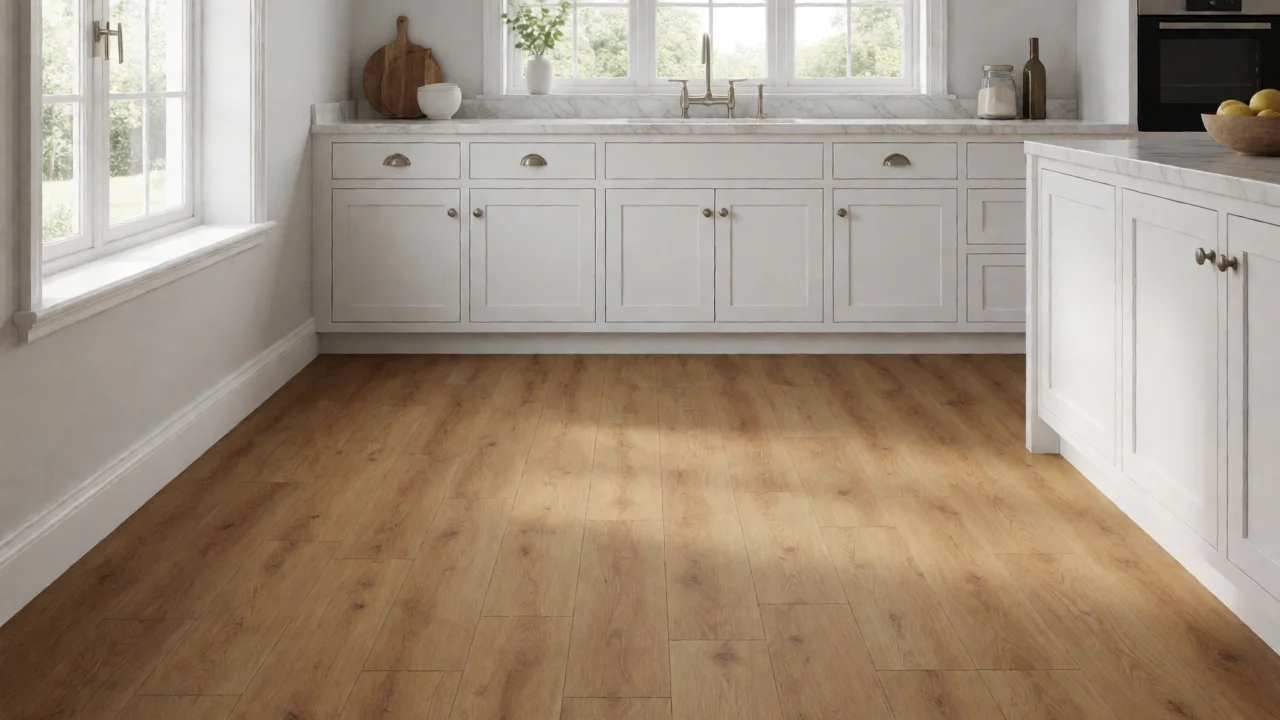
A kitchen floor faces a unique combination of threats. It’s not just water. You’ve got hot grease that can discolor certain finishes, acidic spills like tomato sauce and citrus juice that etch natural stone, heavy foot traffic from a family of five passing through 30 times a day, and dropped objects from counter height. No other room in your house throws this many challenges at a single surface.
That’s why you can’t just pick flooring based on looks. You need to match the material to your actual kitchen habits. A couple who rarely cooks can get away with hardwood. A family that uses the kitchen as their command center needs something tougher.
Water Resistance vs. Waterproof: What’s the Difference?
This distinction matters more than almost anything else when picking kitchen flooring. Water-resistant flooring can handle surface moisture for a limited time. Waterproof flooring won’t let moisture through at all, no matter how long it sits.
Laminate and most hardwood are water-resistant. That means a spilled glass of water is fine if you wipe it up within 24 to 72 hours. But a slow leak under the dishwasher or a pet water bowl that sloshes every day? Those materials will swell, cup, and eventually fail.
Porcelain tile, luxury vinyl plank (LVP), and sheet vinyl are waterproof. Water sits on the surface and never reaches the core. For kitchens, this is the difference between “probably fine” and “actually fine.”
Kitchen Foot Traffic: The Hidden Wear Factor
Average kitchens see 50 to 100 footfalls per hour during meal prep. Multiply that by 365 days and you’re looking at serious wear on your finish and surface. Hardwood scratches over time. Laminate chips at the seams. Even tile can wear its glaze down if it’s not rated for floor use.
Look for flooring with a wear layer of at least 20 mil for vinyl, or a PEI rating of 3 or higher for tile. These ratings tell you how much abuse the surface can take before it shows damage. Our engineered vs. solid hardwood guide covers durability ratings for wood flooring in detail.
Luxury Vinyl Plank (LVP): The Kitchen Workhorse
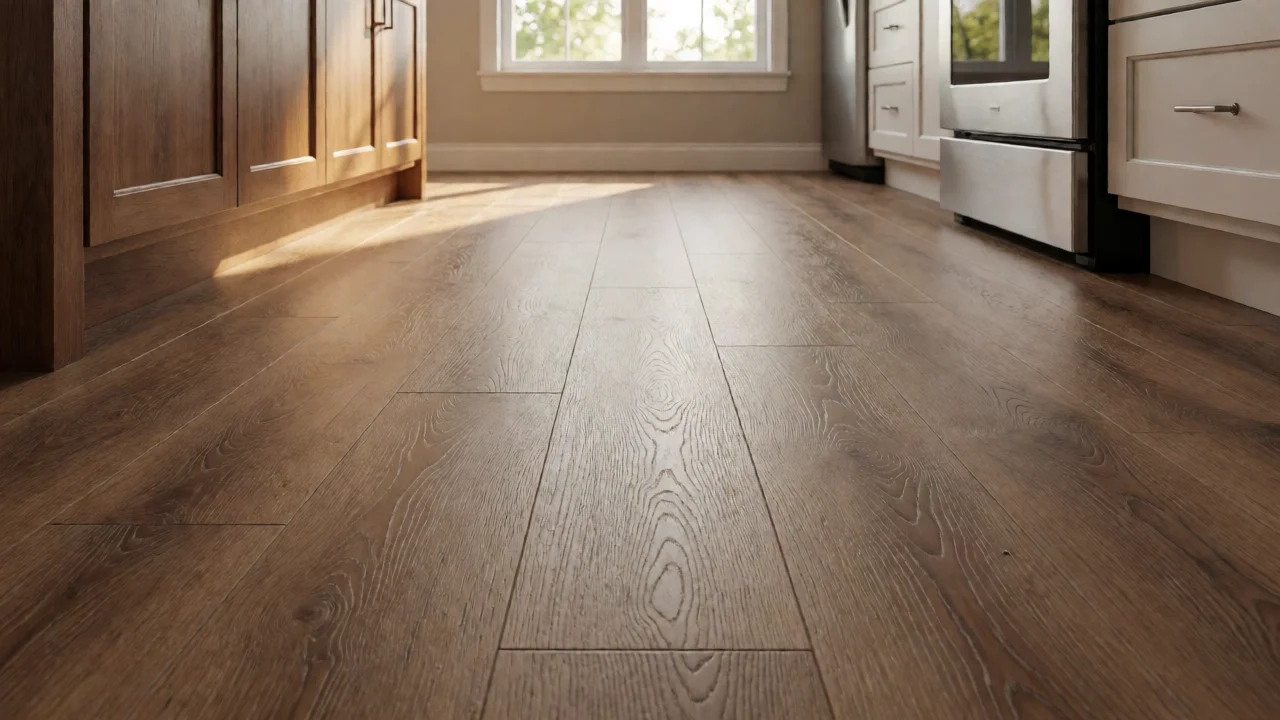
LVP has become the most popular kitchen flooring choice in the last five years, and for good reason. It’s 100% waterproof, comfortable underfoot, and available in realistic wood and stone looks that fool most visitors. Brands like COREtec, Shaw Floorté, and LifeProof dominate the market.
How LVP Handles Kitchen Spills
Spill a full glass of wine on LVP and you can leave it all day. The water never penetrates the wear layer or the SPC (stone plastic composite) core. Grease, coffee, vinegar, soy sauce, even bleach won’t stain or damage the surface. You can mop with standard cleaners without worrying about warping.
LVP Durability Numbers
A quality LVP product gives you 20 mil of wear layer (the clear topcoat that resists scratches). Premium options go up to 28 mil. That translates to 15 to 25 years of kitchen use before the surface starts showing wear patterns. The rigid SPC core resists dents from dropped heavy objects better than WPC (wood plastic composite) cores.
LVP Limitations in the Kitchen
LVP isn’t perfect. Heavy appliances can dent the surface if they’re not on proper floor protectors. Extreme heat from a stove directly in front of the oven can cause discoloration over time. And while it looks great, it doesn’t add resale value the way real hardwood or porcelain tile does. Some buyers still see vinyl as “budget” flooring.
LVP Cost
Expect to pay $2.50 to $5.00 per square foot for the material, plus $1.50 to $3.00 for installation. Total installed cost runs $4.00 to $8.00 per square foot. For a 200-square-foot kitchen, that’s $800 to $1,600 total. LVP is one of the most affordable waterproof options available.
Porcelain Tile: The Indestructible Classic
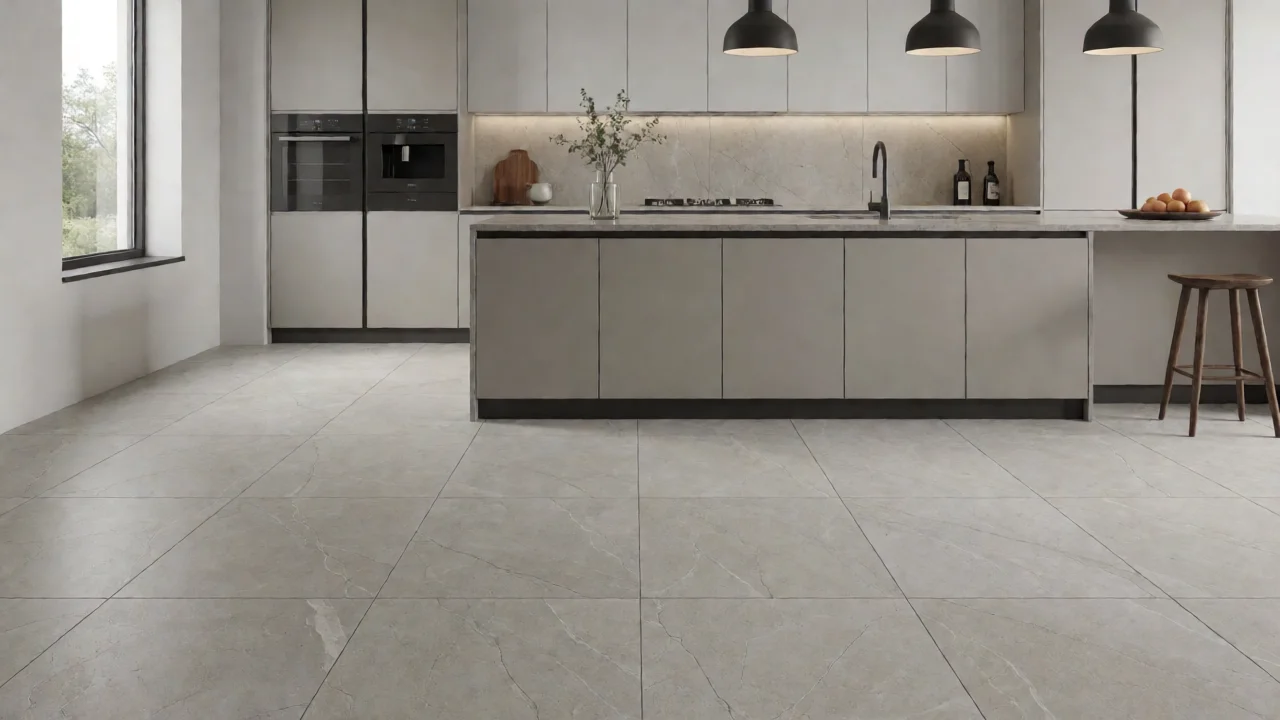
If you want flooring that will outlast every other material in your house, porcelain tile is it. It’s fired at over 2,200 degrees Fahrenheit, making it denser, harder, and more water-resistant than regular ceramic tile. A properly installed porcelain floor can last 50 to 75 years.
Porcelain Tile Water Performance
Porcelain absorbs less than 0.5% water, which classifies it as waterproof by industry standards. You can leave standing water on it indefinitely with zero damage. This is why porcelain is the go-to material for commercial kitchens and restaurant environments.
Porcelain Tile Durability
With a PEI rating of 4 or 5, porcelain handles dropped cast iron pans, dragging heavy appliances, and thousands of daily footfalls without showing wear. It won’t scratch from pet nails, won’t dent from dropped knives, and won’t discolor from grease or acidic spills.
Porcelain Tile Drawbacks
Tile is hard and cold underfoot. Standing on porcelain for an hour while cooking will tire your legs and back faster than softer materials. It’s also unforgiving when things break. Drop a glass on tile and it shatters. Drop it on LVP and it might survive. Grout lines require regular sealing to prevent staining, and cracked grout needs repair to keep water from getting underneath.
Porcelain Tile Cost
Material costs range from $3.00 to $10.00 per square foot for standard porcelain. Large-format tiles, patterned designs, and wood-look planks can run $8.00 to $20.00 per square foot. Professional installation adds $5.00 to $10.00 per square foot due to the labor-intensive cutting and grouting process. A 200-square-foot kitchen totals $1,600 to $4,000 installed.
Hardwood: Beautiful but High-Risk in Kitchens
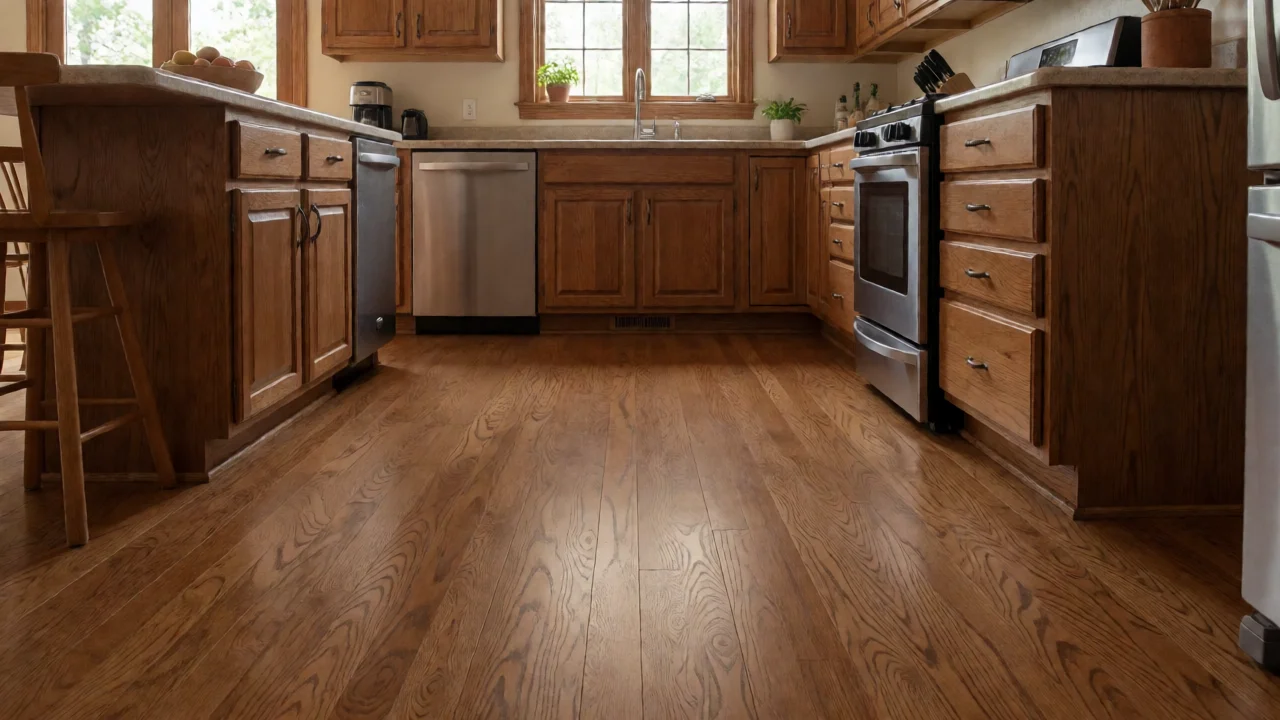
Hardwood gives kitchens warmth and character that no other flooring can match. But it comes with real moisture risks. Solid hardwood expands and contracts with humidity changes, and standing water causes warping, cupping, and staining. Engineered hardwood handles moisture better thanks to its plywood core, but it’s still not waterproof.
How Hardwood Handles Kitchen Spills
A spilled glass of water wiped up quickly is fine. A slow leak under the refrigerator discovered a week later? That’s a problem. Hardwood manufacturers’ warranties typically exclude water damage in kitchens and bathrooms. The finish protects against surface moisture, but it doesn’t seal the joints between boards where water seeps in.
Hardwood Durability in High-Traffic Kitchens
Hardwood scratches from chair legs, pet nails, and dropped utensils. You’ll notice these marks more in a kitchen because it gets more traffic than almost any other room. The upside: hardwood can be sanded and refinished multiple times over its 30 to 100 year lifespan, removing scratches and restoring the finish. No other flooring option offers this kind of renewal. Our engineered vs. solid hardwood comparison breaks down which type works better for kitchens.
Hardwood Cost
Solid hardwood runs $6.00 to $15.00 per square foot for materials. Engineered hardwood is $4.00 to $10.00. Installation adds $3.00 to $8.00 per square foot. A 200-square-foot kitchen comes to $1,800 to $4,600 installed. Factor in refinishing costs every 7 to 10 years if you’re in a busy household.
Laminate: Budget-Friendly but Risky for Kitchens
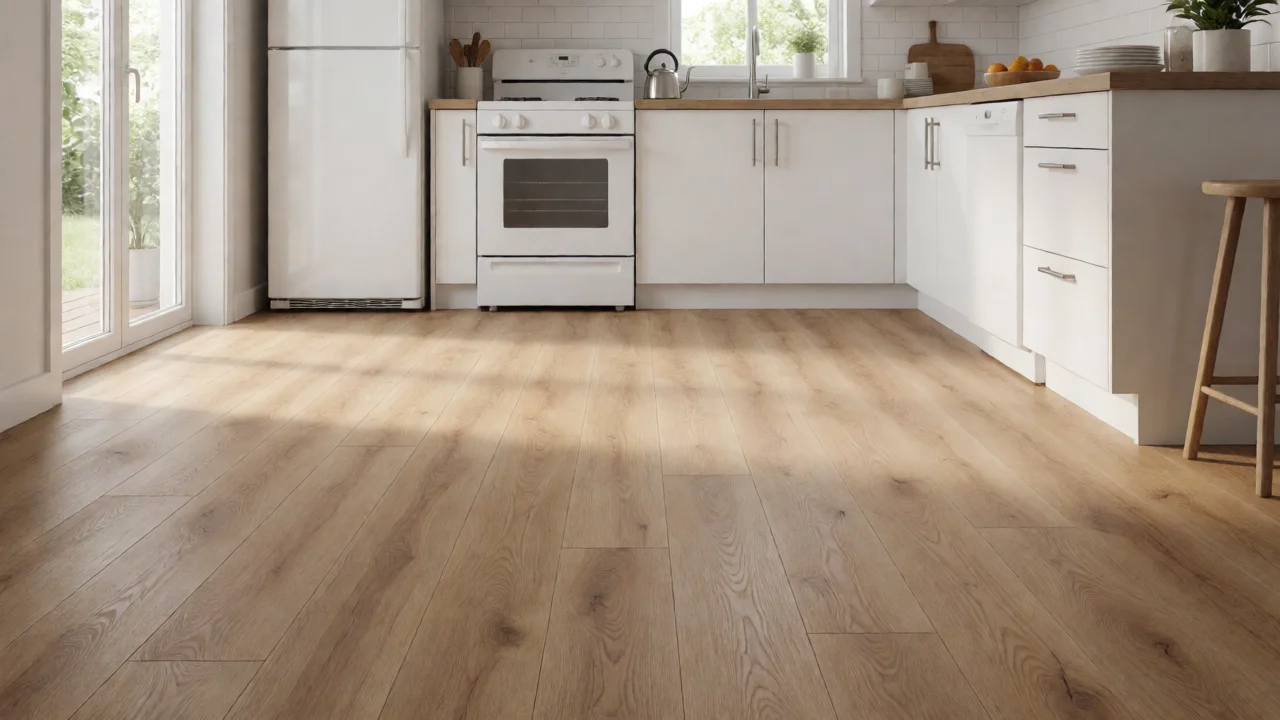
Laminate flooring gives you the look of wood or stone at a fraction of the price. It’s made of fiberboard with a photographic layer and a protective topcoat. Standard laminate is water-resistant, not waterproof. Waterproof laminate products have emerged recently with sealed edges and wax-treated cores.
Laminate Water Performance
Standard laminate tolerates surface moisture for 24 to 72 hours before the fiberboard core starts swelling. Once moisture gets into the core, the planks warp and the seams open up. Waterproof laminate from brands like Pergo Outlast and Mohawk RevWood Plus handles moisture much better, but it’s still a newer technology with a shorter track record.
Laminate Durability
Laminate resists scratches well thanks to its aluminum oxide topcoat. It won’t fade from sunlight and handles foot traffic reasonably well. However, it can’t be refinished like hardwood. Once the surface wears through, you replace the planks. Waterproof laminate has a longer expected lifespan of 15 to 25 years, while standard laminate lasts 10 to 20 years in a kitchen.
Laminate Cost
Standard laminate runs $1.00 to $3.50 per square foot. Waterproof laminate costs $2.50 to $5.00. Installation is DIY-friendly with click-lock systems, adding $1.00 to $2.00 per square foot if you hire a pro. Total installed cost: $2.00 to $7.00 per square foot. It’s the most budget-friendly option on this list, which makes it tempting, but the water risk in a kitchen is real. Our hardwood vs. laminate comparison covers these trade-offs in depth.
Sheet Vinyl: The Underrated Budget Pick
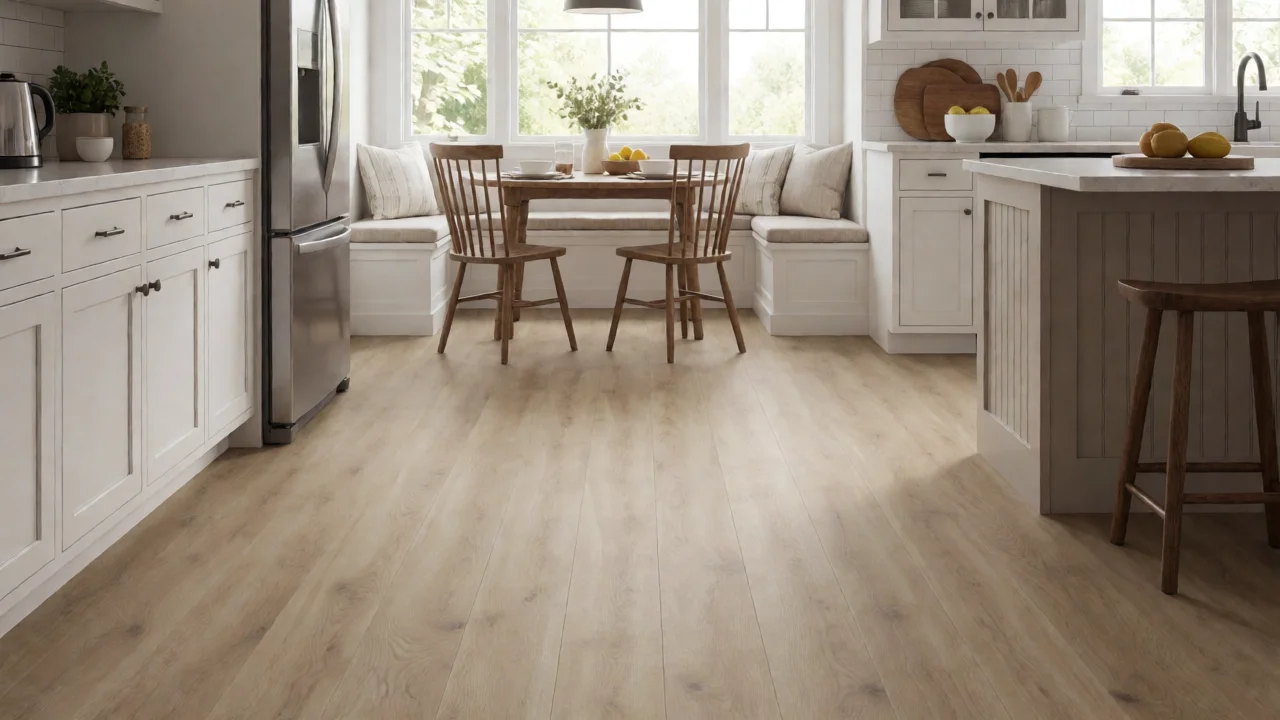
Sheet vinyl often gets overlooked because it doesn’t have the trendy status of LVP, but it’s one of the most practical kitchen floors available. A single sheet covers the entire kitchen floor with no seams except at the walls, which means water has nowhere to penetrate.
Sheet Vinyl Water and Durability
Sheet vinyl is 100% waterproof because there are no joints between planks. It handles spills, standing water, and humidity without any issue. It’s softer underfoot than tile and warmer than hardwood, which makes long cooking sessions more comfortable. The main downside is durability: sheet vinyl dents from heavy appliances and scratches from sharp objects. It typically lasts 10 to 20 years.
Sheet Vinyl Cost
Material costs are $0.50 to $2.00 per square foot. Professional installation runs $1.00 to $2.00 per square foot. For a 200-square-foot kitchen, expect $300 to $800 total. It’s the cheapest option, but you sacrifice the premium look and longevity of LVP or tile.
Kitchen Flooring Comparison: Side by Side
Here’s how all five options compare on the metrics that matter most in a kitchen:
Waterproof rating: Porcelain tile, LVP, and sheet vinyl are fully waterproof. Standard laminate and hardwood are water-resistant only. Waterproof laminate products close the gap but have a shorter track record.
Durability (years): Porcelain tile lasts 50 to 75 years. Hardwood lasts 30 to 100 years (with refinishing). LVP lasts 15 to 25 years. Waterproof laminate lasts 15 to 25 years. Standard laminate and sheet vinyl last 10 to 20 years.
Installed cost per sq ft: Sheet vinyl $1.50 to $4.00. Standard laminate $2.00 to $5.50. LVP $4.00 to $8.00. Waterproof laminate $3.50 to $7.00. Hardwood $9.00 to $23.00. Porcelain tile $8.00 to $30.00.
Comfort underfoot: LVP and sheet vinyl are the most comfortable. Laminate is firm but forgiving. Hardwood splits the difference. Porcelain tile is the hardest and coldest.
Resale value: Hardwood and porcelain tile add the most value. LVP is accepted by most buyers. Laminate and sheet vinyl may raise eyebrows with higher-end buyers.
For a deeper look at how flooring direction affects the visual flow of your kitchen, check our guide on which direction to lay hardwood flooring. The same principles apply to LVP and laminate planks.
Not sure which option fits your kitchen? Our free kitchen floor planner lets you visualize how each flooring type looks in your exact space – so you can compare options side by side before committing to a material.
How to Choose the Right Kitchen Flooring
Consider Your Cooking Habits
If you cook daily and regularly deal with spills, splashes, and grease, go with a fully waterproof option: LVP, porcelain tile, or sheet vinyl. If you’re more of a takeout household, hardwood or waterproof laminate can work fine with reasonable care.
Think About Your Household
Households with kids, pets, or elderly family members need flooring that resists slipping, absorbs impact, and handles constant moisture from pet bowls and muddy shoes. LVP is the best all-around pick for families. Tile is great but slippery when wet. Hardwood scratches easily from pet nails.
Match Your Budget
For under $1,000 total, sheet vinyl is your best waterproof option. For $800 to $1,600, LVP delivers premium looks with zero water risk. For $1,600 to $4,000, porcelain tile gives you a lifetime floor. Hardwood and waterproof laminate fall in the mid-to-high range depending on species and quality.
Plan Your Layout First
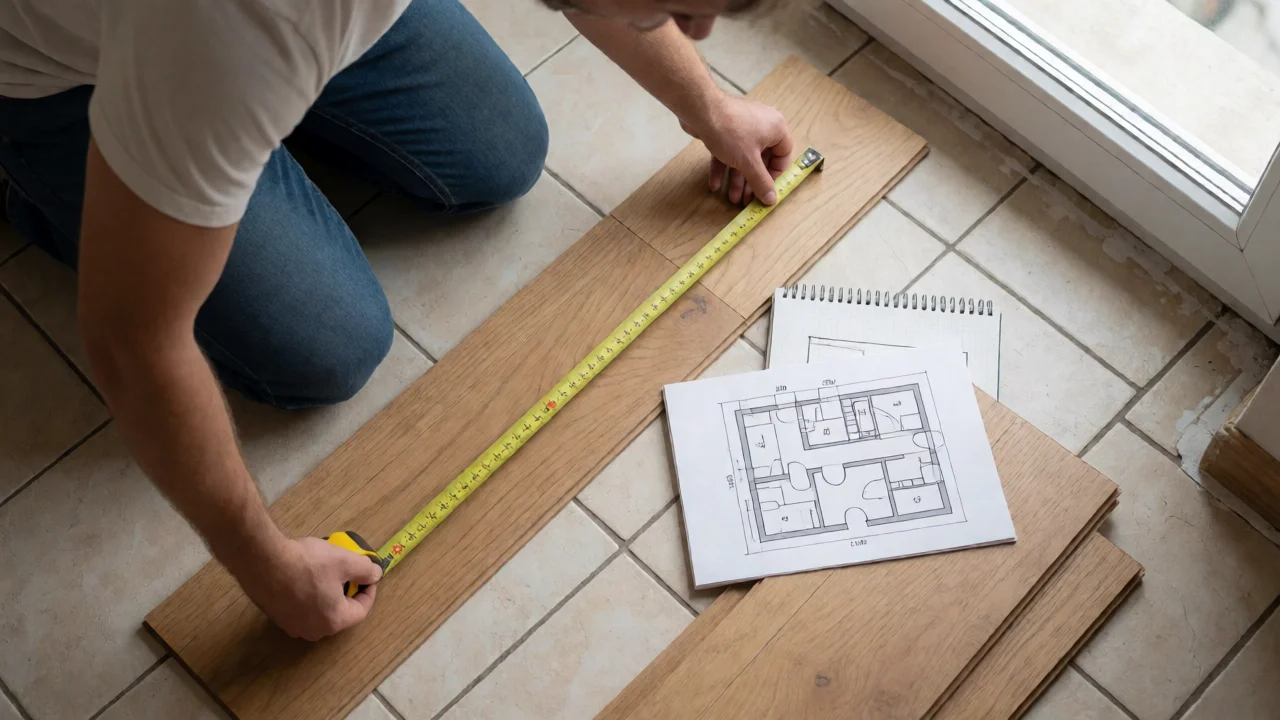
Before ordering flooring, plan your layout to minimize waste. Kitchen floors often have irregular shapes around islands, peninsulas, and appliance alcoves. Our floorboard layout planner helps you calculate the exact material you need and avoid over-ordering. You can also learn about common stagger pattern mistakes that make a floor look amateur.
Think About Open Floor Plans
If your kitchen opens into a living room or dining area, the flooring choice affects the entire space. You’ll want a material that transitions smoothly between zones. LVP and hardwood both work well for open floor plans because they flow naturally from room to room. Tile creates a visual break that can look intentional or awkward depending on the transition. See our direction guide for tips on creating visual flow in open layouts.
Whether you’re running planks from the kitchen into the living room or creating a seamless flow across your open plan, mapping it out first makes a big difference. Try our free floor plan tool to see how your flooring choice connects across multiple rooms – and get exact material quantities for the whole space.
Installation Tips for Kitchen Flooring
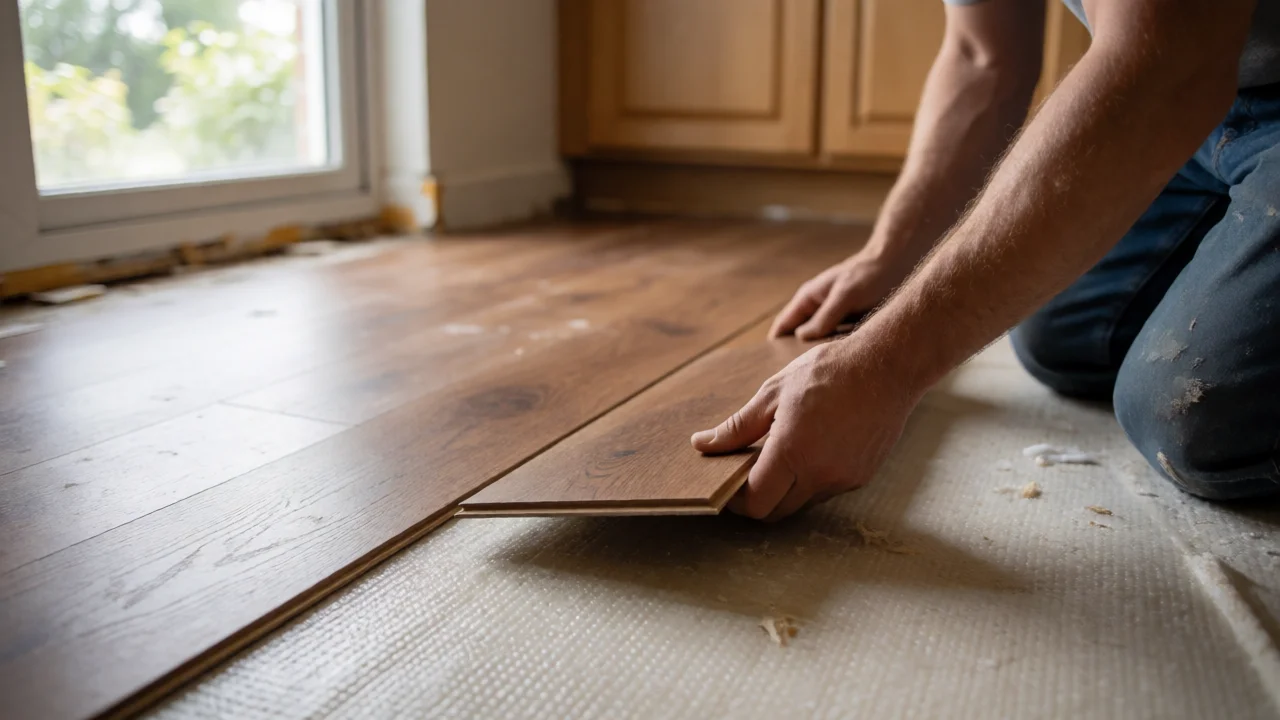
Whatever material you choose, kitchen installation has specific requirements. Moisture barriers are essential under any flooring that isn’t fully waterproof. They protect against subfloor moisture that causes warping from below. For tile, a proper cement backer board prevents cracks from subfloor movement.
Acclimate your flooring to the kitchen environment for 48 to 72 hours before installation. This lets the material adjust to the room’s temperature and humidity, reducing post-installation expansion and contraction. Hardwood and laminate are especially sensitive to this step.
For kitchens with islands or peninsulas, plan your layout so cuts fall in less visible areas. Full planks or tiles should run toward the main entrance to create the best visual impression. Our herringbone vs. chevron guide covers advanced layout patterns if you want something beyond straight planks.
Sealing and Finishing
Even waterproof flooring benefits from proper sealing at the edges. Caulk along baseboards, around the island, and at any transition points to prevent water from sneaking underneath. For tile, apply a quality grout sealer after installation and reapply annually to prevent staining and moisture penetration.
Frequently Asked Questions
Budget matters. Our flooring installation cost guide breaks down 2026 prices by material.
What is the most waterproof flooring for a kitchen? +
Can you put hardwood flooring in a kitchen? +
Is LVP or tile better for a kitchen? +
How much does kitchen flooring cost for a typical kitchen? +
What flooring lasts the longest in a kitchen? +
Is waterproof flooring necessary for a kitchen? +
What flooring is easiest to clean in a kitchen? +
Ready to Plan Your Floor?
Plan your next project with Floorboard Planner – free, browser-based, no credit card required. Get a millimeter-accurate blueprint and cutlist in minutes.
Try Floorboard Planner Free →Written by the Floorboard Planner Team
FloorboardPlanner.com helps homeowners plan flooring projects with precision. Our free floorboard layout tool estimates material quantities and lets you compare plank directions before installation.